Jun 30, 2026
“Capital Markets Must Help Finance the Energy Transition”
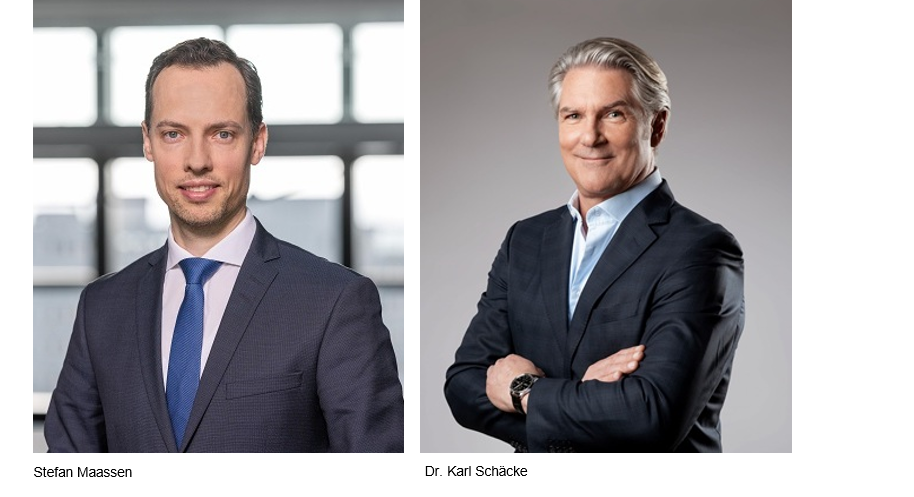
Interview with Dr. Karl Schäcke, CEO, ASTA Energy Solutions, and Stefan Maassen, Head of Capital Markets & Corporates, Deutsche Börse, Unternehmeredition 2/2026. Interview by Eva Rathgeber
The energy transition is driving investments worth billions of euros in power grids, infrastructure and electrification. One company benefiting from this trend is Austrian-based ASTA Energy Solutions, a specialist in high-performance copper components for transformers and generators. At the beginning of 2026, the company took the step to go public on the Frankfurt Stock Exchange. In this joint interview, CEO Dr. Karl Schäcke and Stefan Maassen of Deutsche Börse discuss the IPO process, the importance of capital markets for mid-sized companies and the financing of the energy transition.
Dr. Schäcke, ASTA is a long-established industrial company and went public at the beginning of this year. Why now?
Dr. Karl Schäcke: The ambition to go public had existed much earlier. However, market conditions for small and mid-cap companies had been challenging for a long time. At the same time, we were previously part of a more complex corporate structure, which did not make our equity story any easier for investors to understand. Only after ASTA had been positioned as an independent company were we able to communicate our growth story in a clear and focused way.
In addition, since 2023 we have consistently exceeded our internal forecasts on a quarterly basis and secured long-term customer contracts – including with Siemens Energy and GE Vernova. That gave us considerable momentum.
Mr. Maassen, was ASTA’s IPO also a signal for the German IPO market as a whole?
Stefan Maassen: Absolutely. It is always positive when successful IPOs take place early in the year. ASTA demonstrated that capital markets are once again open to mid-sized companies. Several factors came together: a compelling equity story, the topic of energy sovereignty in Europe, electrification and increasing energy demand driven by data centers and AI. This generated significant interest among investors. The capital increase to finance growth was also particularly important. That is exactly what capital markets are intended for.
Dr. Schäcke, how have you experienced the first months after the IPO?
Dr. Karl Schäcke: Very intense, but positive. The first few minutes of the first trading day were probably the longest of my life. At one point, the share price traded around 60 percent above the issue price.
Of course, that was very pleasing. At the same time, it was important for us to set realistic expectations and not promise anything we could not deliver. We have since raised our full-year targets and exceeded market consensus expectations. However, what matters most is not the short-term share price performance but the sustainable execution of our strategy.
The market environment was also shaped by geopolitical uncertainty, including tensions in the Middle East. How resilient is ASTA’s business model in such an environment?
Dr. Karl Schäcke: From our perspective, recent developments have actually confirmed the resilience of our business model. Of course, there have been isolated operational challenges, particularly in logistics and procurement. Overall, however, we do not expect any material negative impact. Our supply chains are broadly diversified, and we have sufficient alternatives in sourcing.
Mr. Maassen, what does a company need today to be “capital market ready”?
Stefan Maassen: Preparation, transparency and credibility. An IPO is not an endpoint; it is the beginning of a long-term capital markets story.
Investors want to understand why a company is going public and what its growth strategy looks like. Especially in the small and mid-cap segment, clear positioning and transparent communication are essential. In addition, companies need to deliver on what they promised during the IPO process – or ideally exceed expectations. ASTA has done this very consistently.
Dr. Schäcke, how significant was the organizational effort involved?
Dr. Karl Schäcke: Very significant. At the busiest stage, we had up to 16 investor meetings per day. At the same time, we had to ensure internally that the organization was prepared for growth and for life as a listed company. This affects reporting, governance, processes and leadership culture.
In a positive sense, capital markets encourage companies to become even more professional.
How do you intend to use the approximately EUR 125 million raised through the capital increase?
Dr. Karl Schäcke: We are pursuing three key investment priorities.
First, we are expanding capacities globally, including in China, India, Bosnia and Brazil.
Second, we are investing heavily in recycling and vertical integration, particularly in copper recycling and copper processing. This strengthens the resilience of our supply chain.
Third, we are improving our balance sheet structure and reducing leverage. This creates additional financial flexibility to support future growth.
What market opportunities do you see for ASTA?
Dr. Karl Schäcke: The figures speak for themselves: more than 40 percent of Europe’s electricity grids are over 40 years old. By 2030, around EUR 580 billion is expected to be invested in grid infrastructure in Europe alone. Globally, we are talking about investments measured in the trillions.
Millions of transformers are currently reaching the end of their technical life. At the same time, the entire energy system is changing, moving towards decentralized generation and renewable energy sources. This requires more powerful and more resilient grids. That is exactly where we benefit.
How does an IPO change a company internally?
Dr. Karl Schäcke: Visibility increases tremendously. Internally, I often say: “We are now in the shop window.” Every quarter, capital markets closely monitor our performance.
This increases responsibility, but it also creates motivation. We are deliberately using this momentum to drive further professionalization, attract talent and continue developing the company.
Stefan Maassen: Many people underestimate how much of a professionalization boost an IPO can provide. Listed companies become more transparent, more comparable and often more attractive to employees and business partners.
In addition, capital markets open up additional opportunities, such as employee participation programs or international expansion. Employee education is also important – understanding what it means to be part of a listed company.
Looking back, is there anything you would do differently?
Dr. Karl Schäcke: Yes. I would bring additional specialists on board earlier. New requirements arise immediately after an IPO, particularly in areas such as investor relations, reporting and governance. These functions need to be professionally staffed from day one.
ASTA had strong cornerstone investors, including Siemens Energy, Invesco and BNP Paribas Asset Management. How important was that?
Dr. Karl Schäcke: Very important. Siemens Energy was not only an investor but also a strong signal to the market. Together with the other cornerstone investors, this contributed significantly to transaction certainty and helped build trust.
Stefan Maassen: Particularly in the current market environment, cornerstone investors are an important stabilizing factor. They create momentum and increase placement certainty. At the same time, there must be sufficient free float to ensure adequate trading liquidity. ASTA achieved this balance very successfully.
Mr. Maassen, do you expect 2026 to be a good year for IPOs?
Stefan Maassen: The start has definitely been positive. It is particularly encouraging that several small and mid-cap companies have successfully come to market.
If we see ten new listings in Frankfurt in 2026, it will have been a solid year. Historically, however, there have been much stronger years. In the late 1990s and early 2000s, we sometimes saw well over 100 IPOs per year. What matters is that capital markets in Europe are once again used more actively as an instrument for growth.
Finally, a question to both of you: What role will capital markets play in the energy transition going forward?
Dr. Karl Schäcke: A central one. Investments in grids, infrastructure and electrification are so substantial that they will be difficult to finance without capital markets. The energy transition needs capital markets.
Stefan Maassen: I fully agree. Europe needs to strengthen its competitiveness. That requires growth capital – and this is precisely where capital markets can play a much greater role than they do today.
Thank you both for this insightful discussion.
ABOUT THE INTERVIEWEES
Dr. Karl Schäcke is CEO of ASTA Energy Solutions. The PhD-trained executive has many years of international industrial experience and has been responsible for the company’s strategic development for several years. Under his leadership, ASTA successfully completed its IPO in Frankfurt. www.astagroup.com
Stefan Maassen is Head of Capital Markets & Corporates at Deutsche Börse. He supports companies in accessing capital markets and has extensive experience with IPOs in the small- and mid-cap segment.